
Poisonous Mushrooms
of South Africa
Critical identification of dangerous species — the ones that cause serious harm or death. Know before you forage. Click View Now for full toxin profiles and field identification tests.
Dangerous species — know them before you forage
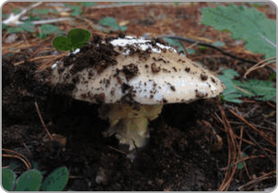
Amanita phalloides
Death CapAmatoxin mushrooms — chiefly the Death Cap — cause about 90–95% of mushroom deaths worldwide. Half a cap may be fatal. T…
Amanita phalloides — Death Cap
Seek emergency medical care immediately if any suspected ingestion. Poison Information Helpline: 0861 555 777 (24 hours).
Amatoxin mushrooms — chiefly the Death Cap — cause about 90–95% of mushroom deaths worldwide. Half a cap may be fatal. The Death Cap grows under planted oak trees across suburban SA — Cape Town, Stellenbosch, Paarl, and any area with mature planted oaks. The three-phase clinical progression makes it particularly deadly: apparent recovery after initial vomiting delays emergency treatment until irreversible liver damage has occurred.
Identification & Ecology| Habitat | Mycorrhizal under planted oaks and other hardwoods — Cape Town, Stellenbosch, suburban SA |
| Season | Autumn under oak |
| Key ID | Yellow-green to olive-grey cap; white gills; white ring on stipe; CUP-LIKE VOLVA at base (must dig up); white spore print; faint honey smell when young |
| Amatoxins (α-amanitin) | Inhibits RNA polymerase II — blocks protein synthesis in liver and kidney cells; no antidote |
| Phallotoxins | Poorly absorbed when eaten; contribute little to systemic toxicity |
| 3-Phase progression | Phase 1 (usually 6–12h, up to 24h): violent GI illness. Phase 2 (24–72h): apparent recovery. Phase 3 (72–96h): organ failure |
| Treatment | Immediate hospital; activated charcoal, IV fluids, IV silibinin and NAC; liver transplant in severe cases |
NEVER pick white-gilled mushrooms near oak trees. Always dig up the base — the cup-like volva, white gills and white spore print distinguish it from edible Agaricus field mushrooms (pink-to-brown gills, dark brown spore print, no volva). No antidote exists. Seek emergency care immediately if any suspected ingestion — do not wait for symptoms.
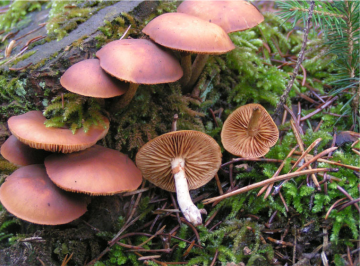
Galerina marginata
Galerina / Deadly SkullcapThe Deadly Skullcap contains the same lethal amato…
Galerina marginata — Galerina / Deadly Skullcap
Seek emergency medical care immediately if any suspected ingestion. Poison Information Helpline: 0861 555 777 (24 hours).
The Deadly Skullcap contains the same lethal amatoxins as the Death Cap and grows in suburban gardens on wood chips, garden beds, and dead wood stumps. Its resemblance to the edible Honey Fungus (which also grows clustered on dead wood) makes it a known cause of fatal poisoning.
Identification & Ecology| Habitat | Saprotrophic on dead wood, wood chips, and buried wood — suburban SA gardens and parks |
| Season | Year-round; most common in cool, moist periods |
| Key ID | Small honey-brown cap; fragile ring or ring-zone on stipe (often lost); RUST-BROWN SPORE PRINT (critical); clustered on dead wood; resembles edible Honey Fungus or Velvet Shank |
| Amatoxins (α-amanitin) | Identical to Death Cap; no antidote; liver and kidney failure |
| Critical difference from Honey Fungus | RUST-BROWN spore print vs WHITE spore print of edible Honey Fungus |
| Ring | Fragile and often reduced to a faint zone or lost — do NOT rely on the ring; the spore print is decisive |
| Treatment | Immediate hospital; silymarin/NAC; liver transplant in severe cases |
ALWAYS do a spore print when collecting clustered wood-growing mushrooms. WHITE = possibly edible Honey Fungus or Velvet Shank. RUST-BROWN = Galerina — do not eat. A 5-minute spore print can be life-saving.
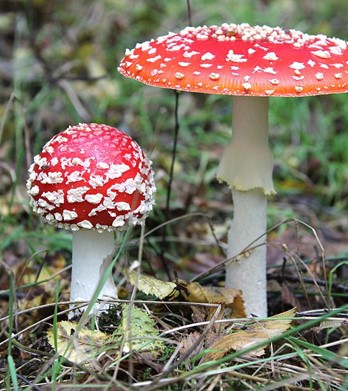
Amanita muscaria
Fly AgaricThe most recognisable mushroom in the world — and poisonous, though rarely fatal. Contains ibotenic acid and …
Amanita muscaria — Fly Agaric
Seek emergency medical care immediately if any suspected ingestion. Poison Information Helpline: 0861 555 777 (24 hours).
The most recognisable mushroom in the world — and poisonous, though rarely fatal. Contains ibotenic acid and muscimol, which cause a neurological toxidrome (delirium, muscle spasms, sedation). Ibotenic acid converts to the more potent muscimol when dried. Used shamanically in Siberian tradition — this does NOT confer safety.
Identification & Ecology| Habitat | Mycorrhizal under pine, birch, and spruce — SA pine forests and planted birch |
| Season | Autumn under pine and birch |
| Key ID | Iconic red cap (can fade to orange-red); white wart remnants (can wash off in rain); white gills; white ring; bulbous base; white spore print |
| Ibotenic Acid | NMDA receptor agonist — excitatory neurotoxin; converts to muscimol on drying |
| Muscimol | GABA-A receptor agonist — sedation, delirium, hallucinations |
| Onset | 30 minutes to 2 hours |
| Symptoms | Nausea, delirium, muscle spasms, sedation, possible convulsions |
| Treatment | Supportive hospital care; benzodiazepines for agitation or seizures. Atropine is NOT indicated — muscarine content is negligible; hospital observation |
White warts (universal veil remnants) may wash off in rain — do not rely solely on the wart pattern. The red cap with white gills, white ring, and swollen base under pine or birch is diagnostic. Shamanic use tradition does not equal safety for uninformed consumption.
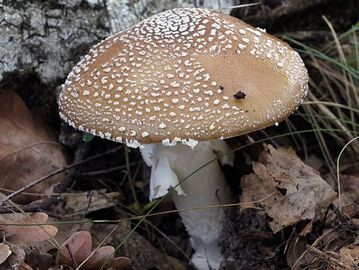
Amanita pantherina
Panther CapThe Panther Cap contains the same ibotenic acid and muscimol as the Fly Agaric but at higher concent…
Amanita pantherina — Panther Cap
Seek emergency medical care immediately if any suspected ingestion. Poison Information Helpline: 0861 555 777 (24 hours).
The Panther Cap contains the same ibotenic acid and muscimol as the Fly Agaric but at higher concentrations — making it more dangerous. The brown cap can be confused with edible brown-capped mushrooms. The white warts and volva ring at the base are the critical identification features.
Identification & Ecology| Habitat | Mycorrhizal under deciduous and conifer trees — SA oak and pine landscapes |
| Season | Autumn |
| Key ID | Brown cap with white wart remnants; white gills; white ring; bulbous base in volva fragments; white spore print; more toxic than Fly Agaric |
| Ibotenic Acid | Higher concentration than Fly Agaric — more severe neurotoxic effects |
| Muscimol | Potent GABA-A agonist — severe sedation and delirium |
| Onset | 30 minutes to 2 hours |
| Treatment | Supportive hospital care; benzodiazepines for agitation or seizures; no antidote — atropine is not indicated |
More dangerous than the Fly Agaric due to higher toxin concentration. The brown cap can be confused with The Blusher (Amanita rubescens) or field mushrooms — always check for white gills, white ring, and bulbous base before eating any brown-capped mushroom.
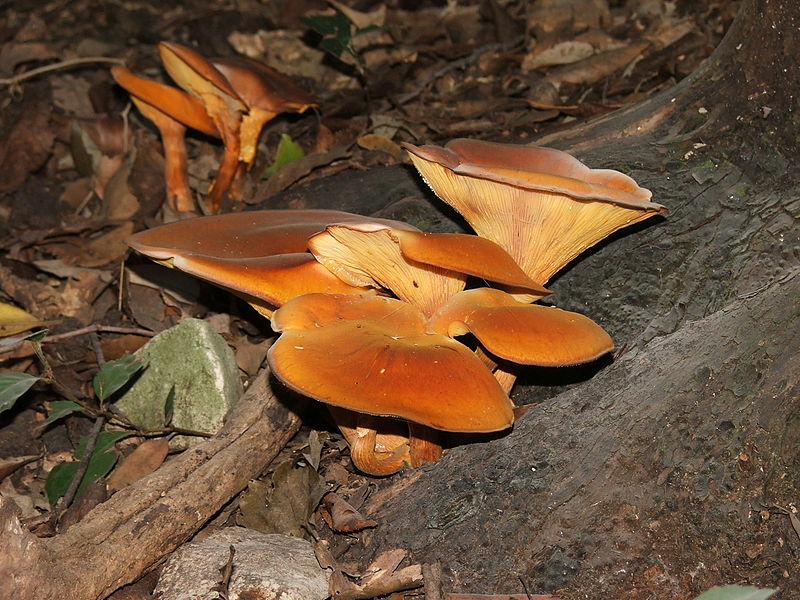
Omphalotus olearius
Copper Trumpet / Olive Tree ClitocybeThe most important poisonous mushroom to know in SA's olive-growing regions (Western Cape, Garden Ro…
Omphalotus olearius — Copper Trumpet / Olive Tree Clitocybe
Seek emergency medical care immediately if any suspected ingestion. Poison Information Helpline: 0861 555 777 (24 hours).
The most important poisonous mushroom to know in SA's olive-growing regions (Western Cape, Garden Route). Frequently confused with the edible Golden Chanterelle due to similar vivid orange-yellow colour. The critical difference: Chanterelle has FORKED RIDGES (not true gills); Copper Trumpet has TRUE BLADE-LIKE GILLS.
Identification & Ecology| Habitat | Saprotrophic/parasitic — at base of olive trees and buried olive roots; SA olive-growing regions |
| Season | Autumn |
| Key ID | Vivid orange-yellow to orange-red; TRUE blade-like gills (not ridges); in clusters at olive tree base; may bioluminesce faintly in the dark |
| Illudins | Sesquiterpene toxins — severe gastroenteritis; irreversible DNA damage in some contexts |
| Onset | 1–3 hours after ingestion |
| Symptoms | Severe nausea, vomiting, abdominal cramps, diarrhoea — 6–24 hours duration |
| Chanterelle test | Press finger across underside — forked ridges (Chanterelle) vs sharp blade gills (Copper Trumpet) |
The single most important test: run your fingertip ACROSS the underside surface. Chanterelle: forked ridges — feel waxy and firm, cannot be removed. Copper Trumpet: true gills — sharp-edged blades. Chanterelle has an apricot scent; Copper Trumpet does not.
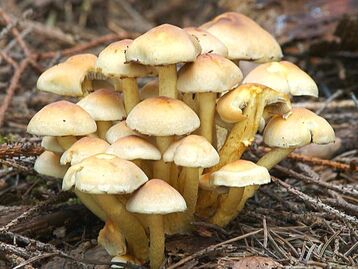
Hypholoma fasciculare
Sulphur TuftThe Sulphur Tuft is one of the most common toxic mushrooms in SA — growing in dense clusters on virt…
Hypholoma fasciculare — Sulphur Tuft
Seek emergency medical care immediately if any suspected ingestion. Poison Information Helpline: 0861 555 777 (24 hours).
The Sulphur Tuft is one of the most common toxic mushrooms in SA — growing in dense clusters on virtually any dead wood stump. The intensely bitter taste is a useful warning if a small piece is touched to the tongue (do not swallow) — but a lack of bitterness never means a mushroom is safe. The olive-tinged gills and purple-brown spore print confirm identification.
Identification & Ecology| Habitat | Saprotrophic — dense clusters on dead stumps and buried wood; SA parks and forests nationwide |
| Season | Year-round; very common after rain on dead wood |
| Key ID | Sulphur-yellow cap with olive centre; crowded yellow-green gills; sulphur-yellow stipe; grows in dense clusters; INTENSELY BITTER taste; purple-brown spore print |
| Fasciculol compounds | Tetracyclic triterpenoids — neurological and GI toxins |
| Steroid compounds | Multiple toxic steroid compounds — liver damage |
| Bitter taste | Warning signal only — bitterness supports ID; absence of bitterness proves nothing |
| Onset | 1–6 hours; nausea, vomiting, diarrhoea, possible neurological symptoms; rare severe cases with liver damage and deaths reported |
Touch the raw flesh to your tongue — the extreme bitterness is immediate and unmistakeable. Do not swallow. Purple-brown spore print distinguishes from similar-looking edible Honey Fungus (white spore print). Very common on dead wood across SA.
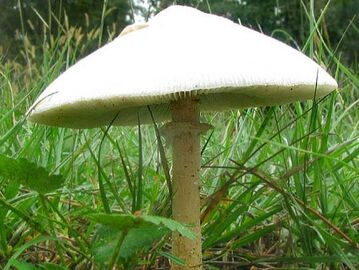
Chlorophyllum molybdites
False Parasol / Green-spored LepiotaA very common lawn mushroom and a frequent cause of mushroom poisoning. Closely resembles the edible Par…
Chlorophyllum molybdites — False Parasol / Green-spored Lepiota
Seek emergency medical care immediately if any suspected ingestion. Poison Information Helpline: 0861 555 777 (24 hours).
A very common lawn mushroom and a frequent cause of mushroom poisoning. Closely resembles the edible Parasol. Young specimens have WHITE gills, so gill colour is not a safe test. The key test is a proper SPORE PRINT from a mature cap: green to grey-green = False Parasol.
Identification & Ecology| Habitat | Saprotrophic — in lawns, parks, and gardens; subtropical and warm-temperate SA |
| Season | Summer to autumn after rain |
| Key ID | Large white cap with brown scales similar to edible Parasol; gills WHITE when young, grey-green only at maturity; green to grey-green spore print; ring on stipe; no volva |
| Toxins | Protein toxin (likely the protease molybdophyllysin) — severe GI illness; not fully characterised |
| Onset | 1–3 hours; severe GI illness |
| GREEN spore print | The definitive diagnostic feature — non-negotiable identification step |
| Treatment | Supportive; severe GI illness for 24+ hours; rare deaths reported in small children |
ALWAYS do a spore print before eating any large parasol-shaped mushroom. Use a MATURE cap and print for several hours (ideally overnight) on paper that is half white, half dark. Green to grey-green = False Parasol — do not eat. A white print does NOT make a mushroom safe on its own: also dig up the base to rule out a volva (deadly white Amanitas) and avoid small parasols under 10 cm (Lepiota species can be deadly).
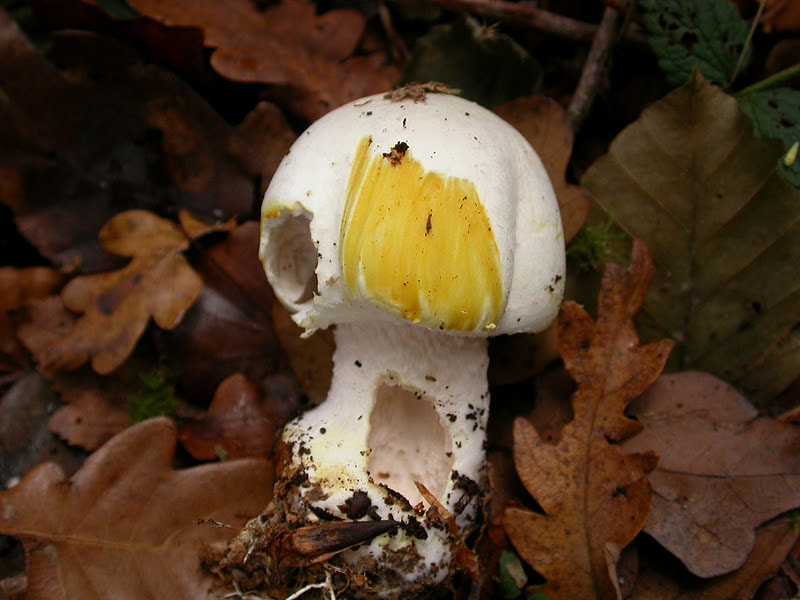
Agaricus xanthodermus
Yellow StainerThe most common cause of confusion with edible Field Mushrooms and Portobello. Closely resembles the…
Agaricus xanthodermus — Yellow Stainer
Seek emergency medical care immediately if any suspected ingestion. Poison Information Helpline: 0861 555 777 (24 hours).
The most common cause of confusion with edible Field Mushrooms and Portobello. Closely resembles the edible Agaricus campestris and Agaricus bisporus but causes GI illness. The chrome-yellow colour that appears at the stipe base when cut — combined with an unpleasant phenol/ink smell when crushed — are the definitive identification features.
Identification & Ecology| Habitat | Saprotrophic — parks, gardens, roadsides; SA nationwide |
| Season | Summer to autumn |
| Key ID | White cap; gills PINK when young to dark brown; chrome-yellow staining at STIPE BASE when cut; unpleasant phenol/ink smell when crushed or cooked |
| Phenol compounds | GI irritants — nausea, vomiting, abdominal cramps |
| Yellow staining | CHROME YELLOW at stipe base when cut — definitive test |
| Phenol smell | Unpleasant ink or carbolic smell when flesh is crushed or cooked |
| Onset | 30 minutes to 2 hours; GI illness 6–12 hours |
Cut the stipe base and press firmly — immediate chrome-yellow staining confirms Yellow Stainer. The smell test (crush the flesh) is equally reliable — phenol/ink odour vs the pleasant mushroomy smell of edible Agaricus. Both tests together make this one of the easiest toxic mushrooms to screen for.
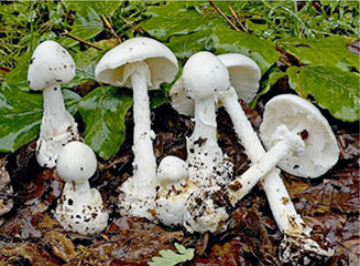
Amanita virosa
Destroying AngelPure white from cap to volva — one of the most beautiful and most deadly fungi on earth. Contains id…
Amanita virosa — Destroying Angel
Seek emergency medical care immediately if any suspected ingestion. Poison Information Helpline: 0861 555 777 (24 hours).
Pure white from cap to volva — one of the most beautiful and most deadly fungi on earth. Contains identical amatoxins to the Death Cap at the same lethal concentration. Its pure white colour causes fatal confusion with edible white mushrooms, including field mushrooms and button mushrooms to the untrained eye.
Identification & Ecology| Habitat | Mycorrhizal under conifers and pine plantations — increasingly found in SA pine belt |
| Season | Autumn under pine |
| Key ID | PURE WHITE throughout — cap, gills, ring, stipe, and volva; cup-like volva at base; smell faint, becoming unpleasant or radish-like with age; no colour change when cut |
| Amatoxins (α-amanitin) | Identical to Death Cap — no antidote; liver and kidney failure |
| Lethal dose | Half a cap may be fatal — among the most lethal organisms on earth |
| Onset | 6–24 hours delayed — apparent wellness period |
| Cup-like volva | ALWAYS dig up the base — the volva may be buried in soil |
| Treatment | Immediate hospital — do not wait for symptoms |
Any white mushroom with white gills and a bulb or cup-like volva at the base — under ANY tree, pine or oak — must be treated as deadly until proven otherwise by an expert. White forms of the Death Cap also occur under oak, and the volva can break off or stay in the soil. There are no safe pure white Amanita species to eat. ALWAYS DIG UP THE BASE of any white mushroom before assessing it.
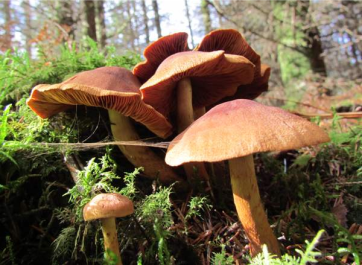
Cortinarius rubellus
Deadly WebcapThe Deadly Webcap's toxin — orellanine — causes delayed kidney failure with onset 2–3 WEEKS after in…
Cortinarius rubellus — Deadly Webcap
Seek emergency medical care immediately if any suspected ingestion. Poison Information Helpline: 0861 555 777 (24 hours).
The Deadly Webcap's toxin — orellanine — causes delayed kidney failure, with onset typically 2–14 days (occasionally up to ~3 weeks) after ingestion. By the time symptoms appear, irreversible renal damage has already occurred and the eating occasion has been forgotten. Native to European conifer forests; causes permanent kidney failure in many cases and occasional deaths.
Identification & Ecology| Habitat | Mycorrhizal under conifers and pine forests — increasingly in SA pine plantations |
| Season | Autumn; brown and easily overlooked |
| Key ID | Rusty orange-brown cap; cobweb cortina veil when young leaving rusty-brown fibres on stipe; rusty-brown spore print; no ring; under conifers |
| Orellanine | Bipyridine nephrotoxin — destroys renal proximal tubule cells; NO ANTIDOTE |
| Onset | Typically 2–14 days (occasionally up to ~3 weeks) — the longest delay of any mushroom toxin |
| Symptoms | Initially flu-like; progressing to thirst, nausea, severe kidney pain, renal failure |
| Treatment | Dialysis; kidney transplant in severe cases; no antidote available |
The long delay is what makes this species so dangerous — by the time the kidney failure manifests, the patient cannot identify the cause. Under introduced SA pine plantations, tawny orange-brown mushrooms with a cobweb (cortina) veil must be treated with extreme caution.
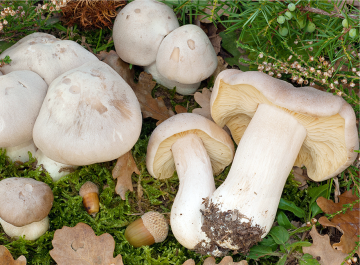
Entoloma sinuatum
Livid PinkgillResponsible for about 10% of mushroom poisonings in Europe. Responsible for hundreds …
Entoloma sinuatum — Livid Pinkgill
Seek emergency medical care immediately if any suspected ingestion. Poison Information Helpline: 0861 555 777 (24 hours).
Responsible for about 10% of mushroom poisonings in Europe. Responsible for hundreds of hospitalisations annually. The gills turn distinctly salmon-pink as spores mature — though they start pale and can mislead. Often confused with edible Tricholoma species.
Identification & Ecology| Habitat | Associated with oak, beech, birch and willow — woodland edges, parks, and gardens |
| Season | Late summer to autumn |
| Key ID | Grey to silver-white cap; gills turn SALMON-PINK at maturity; sinuate gill attachment; unpleasant floury smell; pink spore print |
| GI toxins | Uncharacterised GI toxins |
| Onset | 30 minutes to 2 hours; violent vomiting, diarrhoea, abdominal pain |
| Duration | Severe GI symptoms up to 48 hours; possible acute liver injury; rare deaths reported — seek medical care |
| Pink spore print | Confirms Entoloma genus — avoid the whole genus for eating |
Pink spore print confirms Entoloma — avoid the entire genus for eating. The gills may still be pale when young — check a mature specimen's gills or do a spore print. Floury smell with pale gills in a silvery-grey cap in woodland should trigger caution.
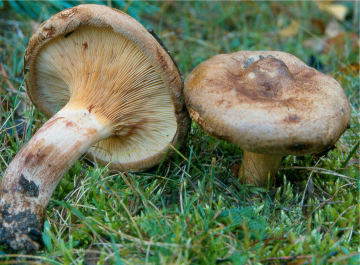
Paxillus involutus
Brown Roll-rimPreviously consumed safely across Europe for generations. Now known to cause a cumulative immune-med…
Paxillus involutus — Brown Roll-rim
Seek emergency medical care immediately if any suspected ingestion. Poison Information Helpline: 0861 555 777 (24 hours).
Previously consumed safely across Europe for generations. Now known to cause a cumulative immune-mediated haemolytic reaction that can be fatal. Repeated consumption creates progressive immune sensitisation — each ingestion can worsen an immune reaction that destroys red blood cells. Past safety does not predict future safety.
Identification & Ecology| Habitat | Mycorrhizal under birch and pine — very common under SA pines |
| Season | Autumn; very common under SA pine plantations |
| Key ID | Brown funnel-shaped cap with persistently inrolled margin; gills run down the stipe and can be detached by rubbing; stains brown-black when damaged; no ring |
| Involutin | Bruising pigment (not the cause). An unidentified antigen triggers IgG antibodies; immune complexes destroy red blood cells on later meals |
| Mechanism | Cumulative — each consumption worsens immune sensitisation progressively |
| Symptoms | Haemolysis, acute kidney failure, circulatory shock — can be fatal when sensitised |
| Critical warning | Previous safe consumption does NOT mean it is safe to eat again |
One of the most important warnings in SA mycology — this species was eaten safely by many people before the accumulation mechanism was understood. Anyone who has eaten it before may now be sensitised. Do not eat under any circumstances.
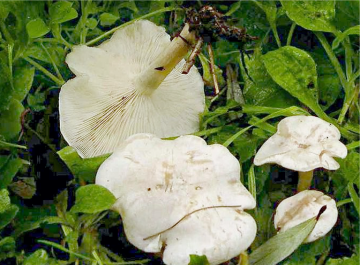
Clitocybe dealbata
Ivory FunnelContains among the highest muscarine concentrations of any known mushroom species. Causes classic SL…
Clitocybe dealbata — Ivory Funnel
Seek emergency medical care immediately if any suspected ingestion. Poison Information Helpline: 0861 555 777 (24 hours).
Contains among the highest muscarine concentrations of any known mushroom species. Causes classic SLUDGE toxidrome within 15–30 minutes. Grows in suburban lawns — often in fairy rings — where it is sometimes confused with the edible Fairy Ring Mushroom (Marasmius oreades).
Identification & Ecology| Habitat | Saprotrophic in lawns, pastures, and grassland — suburban SA parks and gardens |
| Season | Late summer to autumn; often in fairy rings |
| Key ID | Small white to pale grey funnel-shaped cap; crowded white gills; no ring; no volva; no distinctive smell; in lawns and fairy rings |
| Muscarine | Among the highest muscarine contents (with some Inocybe species) — cholinergic (SLUDGE) toxidrome |
| SLUDGE | Salivation, Lacrimation, Urination, Defaecation, GI distress, Emesis |
| Onset | 15–30 minutes — very rapid |
| Treatment | Atropine — the muscarine antidote; hospital management of cholinergic crisis |
SLUDGE toxidrome appearing within 30 minutes of eating lawn mushrooms strongly suggests this species. The Fairy Ring Mushroom (Marasmius oreades) has WIDELY SPACED buff gills that are free or barely attached, and a tough, solid stem that twists without snapping. The Ivory Funnel has CROWDED white gills that run down the stem and a chalky white, flat-to-depressed cap. When in doubt about lawn mushrooms, do not eat.
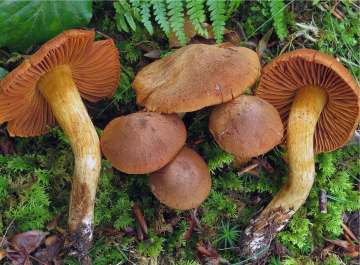
Cortinarius orellanus
Fool's WebcapContains identical orellanine kidney toxin to the Deadly Webcap (C. rubellus) with the same catastro…
Cortinarius orellanus — Fool's Webcap
Seek emergency medical care immediately if any suspected ingestion. Poison Information Helpline: 0861 555 777 (24 hours).
Contains identical orellanine kidney toxin to the Deadly Webcap (C. rubellus) with the same catastrophically delayed 2–21 day onset. The orange-brown colour has caused fatal Chanterelle confusion in Europe. KEY DIFFERENCE: Cortinarius has gills (not forked ridges) and a rusty-brown spore print.
Identification & Ecology| Habitat | Mycorrhizal under oak and beech — SA planted oaks and forest edges |
| Season | Autumn; tawny and easily overlooked |
| Key ID | Tawny orange-brown; cobweb cortina veil when young; rusty-brown spore print; NO true ring; under oak — colour resembles Chanterelle |
| Orellanine | Bipyridine nephrotoxin — same mechanism as C. rubellus; destroys renal tubule cells |
| Onset | 2–21 days — potentially the longest toxin delay of any mushroom |
| Chanterelle confusion | Orange-brown colour ONLY resembles Chanterelle — check for gills vs ridges |
| Rusty spore print | Confirms Cortinarius — never eat any mushroom with rusty-brown spore print near oak |
The Chanterelle test: press your fingertip across the underside. Chanterelle has firm forking ridges. Fool's Webcap has true sharp-edged gills AND a rusty-brown spore print. Both tests together take under 5 minutes.
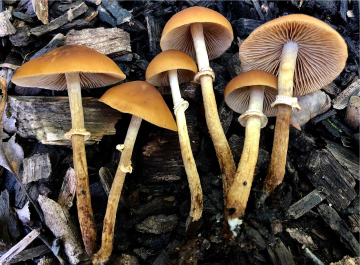
Conocybe filaris
Spring SkullcapA small, brown, entirely unremarkable-looking mushroom in suburban gardens that contains the same le…
Conocybe filaris — Spring Skullcap
Seek emergency medical care immediately if any suspected ingestion. Poison Information Helpline: 0861 555 777 (24 hours).
A small, brown, entirely unremarkable-looking mushroom in suburban gardens that contains the same lethal amatoxins as the Death Cap. Particularly dangerous to children and pets who encounter it in domestic settings. Often mistaken for a harmless weed mushroom.
Identification & Ecology| Habitat | Saprotrophic in lawns, garden beds, and wood chips — suburban SA gardens |
| Season | Spring and summer; suburban gardens |
| Key ID | Small honey-brown cap; ring on stipe; rust-brown spore print; slender fragile stipe; lawn and garden habitat |
| Amatoxins (α-amanitin) | Same lethal toxin as the Death Cap — no antidote |
| Habitat risk | Suburban gardens, lawns, garden beds — high child and pet exposure |
| Onset | 6–24 hours delayed — same 3-phase progression as Death Cap |
| Treatment | Immediate hospital if suspected ingestion — do not wait for symptoms |
The combination of ring on stipe + rust-brown spore print + lawn or garden habitat is the key diagnostic combination. If young children or pets are in a garden with this species present, remove immediately. No antidote exists.
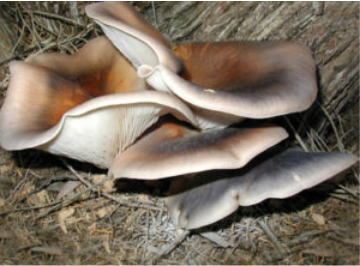
Omphalotus nidiformis
Ghost FungusAustralia's bioluminescent mushroom, now widespread in SA wherever Eucalyptus trees occur. White to …
Omphalotus nidiformis — Ghost Fungus
Seek emergency medical care immediately if any suspected ingestion. Poison Information Helpline: 0861 555 777 (24 hours).
Australia's bioluminescent mushroom, now widespread in SA wherever Eucalyptus trees occur. White to cream, funnel-shaped, growing in clusters on dead Eucalyptus — confused with Oyster mushrooms or edible bracket fungi. Contains illudin sesquiterpene toxins causing severe GI illness.
Identification & Ecology| Habitat | Saprotrophic on dead Eucalyptus and other hardwood — SA with planted gum trees |
| Season | Autumn; clusters on logs and stumps |
| Key ID | White to cream funnel-shaped; TRUE gills (not ridges); clusters on dead Eucalyptus; bioluminescent — faint blue-green glow in complete darkness |
| Illudins | Sesquiterpene toxins — severe gastroenteritis; identical class to Copper Trumpet |
| Bioluminescence | Faint blue-green glow in complete darkness — supports identity, but glow fades with age; NO glow does not rule it out |
| Onset | 30 minutes to 2 hours; severe vomiting, nausea, abdominal cramps |
| SA distribution | Widespread wherever Eucalyptus is planted — Western Cape, Gauteng, KZN |
If you find white funnel-shaped mushrooms on dead Eucalyptus at night, take them into a dark room — Ghost Fungus glows faintly blue-green. Oyster Mushrooms do NOT glow — but a specimen that does not glow is not proven safe. It grows on many hosts (Eucalyptus, pine, acacia and others), so treat any white funnel-shaped cluster on wood with caution unless you are certain.
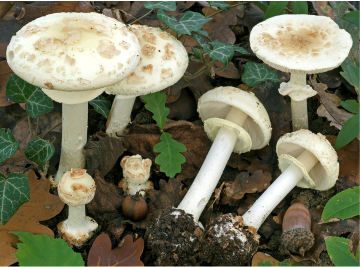
Amanita citrina
False Death CapClosely resembles the Death Cap but generally far less toxic — containing only small amounts of bufo…
Amanita citrina — False Death Cap
Seek emergency medical care immediately if any suspected ingestion. Poison Information Helpline: 0861 555 777 (24 hours).
Closely resembles the Death Cap but generally far less toxic — containing only small amounts of bufotenin rather than lethal amatoxins. The primary danger is confusion: either triggering unnecessary anxiety when found (resembles Death Cap) or, more dangerously, creating complacency that may transfer to the true Death Cap.
Identification & Ecology| Habitat | Mycorrhizal under oak and pine — SA suburban oaks and pine forests |
| Season | Autumn |
| Key ID | Pale lemon-yellow cap (a white form also exists); raw potato smell (supportive, not definitive); white gills; ring on stipe; rounded bulb with an abrupt rim at the base (marginate bulb) — NOT the loose sac-like volva of the Death Cap; white to pale yellow wart remnants |
| Bufotenin | Mild psychoactive — not lethally toxic at normal exposure but causes symptoms |
| Raw potato smell | Supportive feature only — people perceive smells differently; never rely on smell alone |
| Treatment | Supportive; rarely requires hospitalisation unless confused with Death Cap |
| Key distinction | Dig up the base: rimmed bulb (False Death Cap) vs free sac-like volva (Death Cap). Treat any doubt as Death Cap |
The raw potato smell and the rimmed bulb point to False Death Cap, but neither alone is proof. If it has NO distinctive smell or a faint honey smell — treat as potentially Death Cap and do not eat. Never use this as an excuse to pick pale Amanitas.