Sulphur Tuft
Hypholoma fasciculare
| Kingdom | Fungi |
| Class | Agaricomycetes |
| Order | Agaricales |
| Family | Strophariaceae |
| Genus | Hypholoma |
| Species | H. fasciculare |
Sulphur Tuft
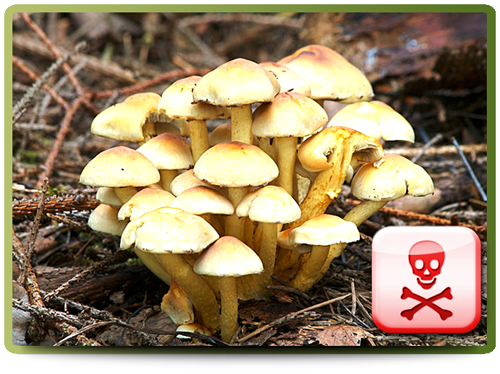
The Sulphur Tuft grows in dense, dramatic clusters on dead wood and stumps, and its vivid sulphur-yellow colouring can make it look temptingly edible. It is toxic, causing severe gastroenteritis, and is made more dangerous by the fact that it can resemble young Honey Fungus (Armillaria) at a glance. The intensely bitter taste is a natural warning — a single bite should be rejected immediately.
The active toxins include fasciculol E and F, steroidal compounds causing gastroenteritis. The purple-brown spore print is a reliable field mark that distinguishes it from the edible Honey Fungus (Armillaria), which has a white spore print. The olive-green gills of mature specimens are also diagnostic. The cluster growth habit on wood, combined with the sulphur-yellow colour and bitter taste, make a clear identification package. Widespread and common across South Africa on dead wood.
Toxins & Clinical Details
| Fasciculols | Steroidal triterpenes causing gastroenteritis |
| Onset | 0.5–3 hours after ingestion |
| Symptoms | Nausea, vomiting, diarrhoea, abdominal cramps |
| Duration | Symptoms resolve in 6–12 hours; severe cases may require hospitalisation |
| Treatment | Supportive care; rehydration |
| Warning signal | Extremely bitter taste — do not swallow if tasted |