Edible
Mushrooms
A guide to wild and cultivated edible species found in South Africa — identification, season, habitat, and preparation. Click View Now on any species for full details.
Cultivated species — available to grow at home
All species below are available as professional-grade grain spawn from our 250m² GMP-aligned facility in Strand. Produced on red sorghum, HEPA-filtered inoculation, dual-stage sterilisation — the same standard as our medicinal extracts. Browse all spawn →
All edible species — wild and cultivated
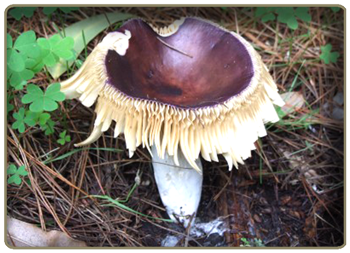
Vivid pink-purple cap, brittle chalk-like flesh. Mycorrhizal with pine and fynbos.…
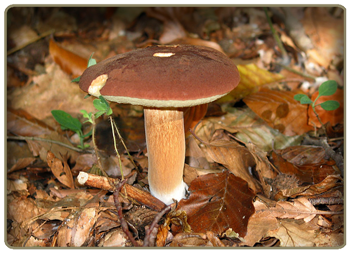
Bay-brown cap; pores turn blue-green when bruised. Under conifers.…
Flesh blushes pink-red when cut or damaged. This mushroom is toxic when raw.…
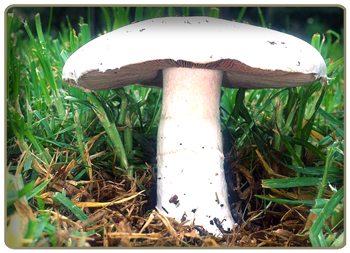
Classic SA grassland mushroom. Pink gills turning chocolate-brown. White spore print — NO.…
Grey-brown cap with dark scabers on stipe. Exclusively under poplar trees.…
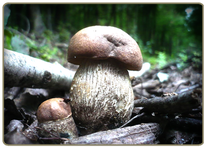
King of edible mushrooms. Brown cap, reticulate stipe, cream pores. Never blues.…
Bleeds carrot-orange latex. Exclusively under pine. Concentric ring zones on cap.…
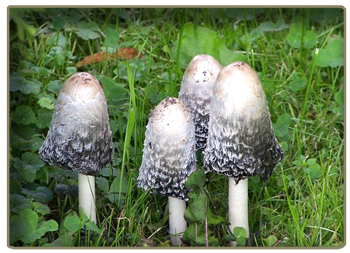
Must harvest young and white — autodigests to black ink. Delicate flavour.…
Persistently slimy brown cap. Yellow pores. Ring on stipe. Exclusively under pine.…
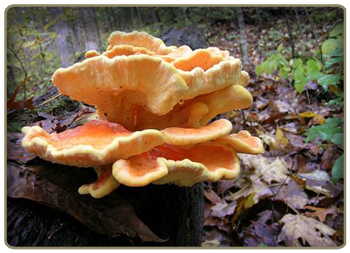
Vivid sulphur-yellow overlapping brackets on wood. Chicken-like texture when young.…
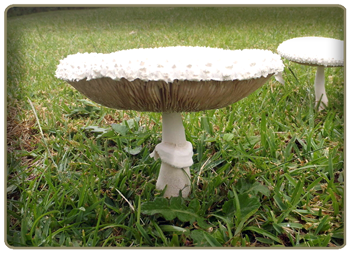
Large parasol cap up to 30cm. Snake-skin stipe pattern. Moveable ring.…
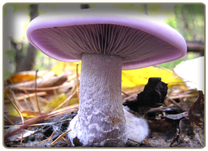
Distinctive violet-purple gills and stipe. Late autumn to winter. Cook thoroughly.…
False forking ridges (not true gills). Apricot scent. Under pine and oak.…
Football to beach-ball sized. Pure white flesh throughout = safe to eat. Slice to confirm.…
Dark velvety stipe base. Honey-coloured cap. Fruits in winter through frost.…
Deep black funnel with no gills. Extraordinary intense flavour when dried.…
Honeycomb hollow cap. Spring fruiting. MUST COOK — toxic raw.…
Clusters at tree bases. White spore print confirms. Cook thoroughly.…
Large ruffled creamy-white mass at base of pine. Also medicinally significant.…
Ear-shaped gelatinous bracket on dead elder wood. Widely used in Asian cuisine.…
Bleeds red juice when cut. Tongue-shaped. On living oak. Young specimens best.…
Fruiting Temp: 18–21°C · Substrate: Wheat or barley straw…
Fruiting Temp: 8–12°C · Substrate: Wheat or barley straw…
Fruiting Temp: 20–28°C · Substrate: Wheat or barley straw…
Fruiting Temp: 18–24°C · Substrate: Wheat or barley straw…
Fruiting Temp: 16–22°C · Substrate: Hardwood supplemented substrate…
Fruiting Temp: 24–32°C · Substrate: Supplemented wheat straw…
Fruiting Temp: 12–18°C · Substrate: Supplemented hardwood…
Fruiting Temp: 18–25°C · Substrate: Hardwood logs or supplemented sawdust…
Fruiting Temp: 13–18°C · Substrate: Supplemented hardwood…
Fruiting Temp: 18–24°C · Substrate: Supplemented hardwood or straw…
Fruiting Temp: 12–18°C · Substrate: Supplemented hardwood…